
The real benefits of a Website
Consider a Website as an, everyday, proactive business tool, to get it performing to

Based on the Internet’s leading CMS, WordPress, installed in more than 60 million Websites worldwide, helping to protect your investment.

We are a small team of Web Designers, based out of Welwyn Garden City, Hertfordshire, complimenting our services by partnering some of the industry’s leading suppliers, allowing us to offer a first class service at a fraction of what other well known suppliers are charging.
We were very impressed with dedication and professionalism exhibited by The Holt Partnership in the development our website, which has served us for some time now with very minimal update.
We and our clients have always found them to provide a professional, prompt and cost effective service. It is a pleasure doing business with them. Highly recommended.
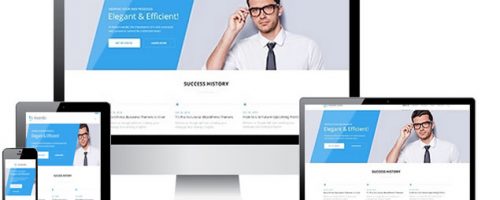
Based on the industry leading WordPress platform, we help release the full potential of this terrific CMS, allowing your Website to become what it really is: an everyday Proactive Business Tool. Includes 24 pages of rich content.
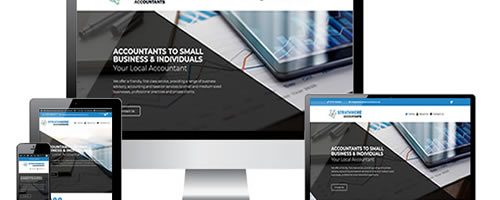
For those working to a tight budget or just after something simple, our WebStarter service includes everthing you need for a professional image on the Internet. It includes a 3 page Website, together with comprehensive Email facilities.

Although this article is primarily aimed at Accountants Web Design, it is also just as relevant to the majority of other industries/professions.
Have you developed it yourself and wondering if there is anything you have missed? Is your Website a success or has it proved a big disappointment? If so, do you want to learn some simple steps on how to improve your Website and make it more of a pro-active, every day business tool? If so, the following points should highlight if you are on the right track or if there are any immediate fixes required.
When we discuss a client’s requirements, especially an Accountant’s Website, one of the first things we ask them is; what are the objectives for the new Website? Typically, this takes them by surprise, since, it is not something they have really considered in any detail.
Most likely, their only objective is: their current website looks dated and in need of a redesign; or if it is their first Website, they want it to help generate business leads. Now, these two objectives are perfectly fine, however, in isolation, they will seriously limit the potential of owning a Website. Other key objectives to consider are;
To give more of an idea on how widening Website objectives can give Websites a greater chance of success, you may wish to view our other The Real Benefits Of A Website article.
When writing content for your Website, it is important to consider the different types of people visiting your Website. Most likely, each of these visitor types will have different informational requirements and how they interact with your Website, may also be different. Typically, every Website has at least five types of visitor.
For example, a wildlife park will have both adults and children visit their Website. Most likely, children will respond mostly to visual content, whereas the parents, will be more interested in learning more about the facilities, to ensure a good family day out. For Accountant Websites, many start-up businesses will visit your site, in which case, it would be prudent to cover your Start-up service in quite a bit of detail. Perhaps they are thinking of changing Accountant and wondering if it is better to stay with their existing Accountant.
It is only once you have identified the types of visitors visiting your Website, will you be able to write compelling content and structure your Website to encourage strong interaction with it. Create content, then navigate your website as one of your visitor types, to confirm if it is enticing enough to make them want to contact you. Remember, when someone visits your Website for the first time, you have around twenty seconds to gain their attention.
Ultimately, the success of your Website will depend on the quality of your written content and it’s ability to turn visitors into clients. It is not easy and can take many attempts to try and get it right. Why work hard to attract visitors, only to see them leave your Website without bothering to take a proper look? The following are some important points that need to be considered when creating content. For more information, you may wish to read our article on How to write compelling website content / copywrite.
Most new Website owners wrongly assume, their Website will be found by just about anyone looking for their services or products. Definitely not so, unfortunately! With, literally, thousands of new Websites being added to the Internet every day, Search Engines have the unenviable task of trying to filter the good from the bad. They do this by crawling the Internet using Web Robots. These robots are capable of retrieving vast quantities of information which is then analysed by special algorithms, able to score and rate millions of Websites.
Needless to say, Robots and their algorithms take an objective view of the sites they look at. Like any judge in a competition, Search Engines will judge Websites on certain criteria. Not surprisingly, Websites ignoring this criteria or not giving it enough consideration, are given low scores and placed well down the list of search results. If you are not on the first two or three pages (some would say first page), then there is little chance of being visited by Web Surfers. The following are some of the mistakes we frequently see when asked to review an Accountant’s Web Design. For more information, you may wish to check out our other two posts; How to optimise your Website for Search Engines and Why optimise your Website for Search Engines;
Without a doubt, your Website should play a central role in any and all of your marketing initiatives. Afterall, it is available 24/7 and is, essentially, the Internet version of your Sales and Customer Support Teams, rolled into one.
Although, if developed properly, your Website will play an important role as as a new business lead generation tool, it is also a fantastic tool for creating stronger bonds with your existing client base, something that is often overlooked by the vast majority of Accountant Websites we review. Rest assured, if your Website is not geared up to satisfy the requirements of your existing client base, your competitors will definitely be looking for ways to bring their own brand firmly into view via their own website.
However, the key is; to make it worthwhile for your clients to visit your website. Experience tells us, most websites have little more than a summary of each of their services, something that existing clients already know, so why should they want to visit your website? In this scenario, you should be asking yourself; how can my Website help close business and reduce negotiation timescales.
If you have a key service, such as our own WordPress ProCms service service, perhaps it would be more useful to create a new section on your Website for this service with it’s own sub-menu of associated pages. These could include a summary page, an FAQ page, a prices page, a Case Study page and any other page that would supply the information and answers to typical sales questions about this particular service. Including video tutorials may also be a good idea e.g. How to Use Quickbooks, Xero etc.
Now, with the above in mind, imagine how much easier and more effective it will be for you to, simply, send an email to the client with a link to the section on your website, explaining everything the client would want to know about a particular service. Not only does it give them the opportunity to view the information at a time that suits them, they may be tempted to send a link of the service to other of their friends or business associates. And since they are now on your Website, perhaps they will take the opportunity to view other areas of the site.
And all the time; your brand is being firmly imprinted on their mind. Or if you are an Accountant, why not run a blog that allows visitors to comment on breaking news stories that you know your clients would want some answers to. Not only does it look very professional, it should also cut down on the time answering repetitive questions.
We’ve all seen it: Websites, where there does not appear to be any logical navigation structure; pages you know that exist but can’t find; generally, a lack of help for getting from A to B.
The good news is, this is one of the easiest issues to fix in a Website. For most Accountant Websites, having drop-down menus for your main Navigation Menu (usually at the top of the page) is a good start. From there, visitors will know where they are in the structure of your website and finding a page will be only two mouse clicks away. Create sub-menus for sections of your Website that have more than one page. Hyperlink text within your written content (in context) to other related pages.
Unfortunately, this is one of the most common reasons why many Website owners, needlessly, confuse it with an old site and, therefore, place it in urgent need of replacement. Although there are many aspects to developing a successful Website, the key one is, written content. If you have great content, it can often “gloss over” the shortcomings of the overall website look and feel.
However, since the majority of Accountants have to continually change to keep up with changing circumstances, within a relatively short period of time, the Website soon becomes out-of-date and no longer reflects them or their services. Typically, this leads to disinterest with their own Website, resulting, sometimes, in a Website being “thrown out” and a new Website being developed, even though, all that was required was more up-to-date content.
From an existing client standpoint, poor content can be disastrous. Why would they want to visit your Website, knowing that most of it is now out-of-date. You end up with one of your business’s most valuable marketing tools i.e. your Website, being virtually unused and a bit of an embarrassment.
The secret is for you to have the ability to update your own Website when and how often you wish. If you are able to make instant tweaks to your Website or add pages for a new service, then you will be more inclined to do so. Compare this to having to contact your Web Designer, explaining what you want, then having to wait for, what could be, a quote that would not justify the cost of implementing the changes, resulting in, you’ve guessed it; a site that quickly becomes out-of-date and of little help to the business.
With regards to Website design, we will refer to the look and feel of the Website, rather than the overall structure.
Just imagine you are a small business looking for an Accountant and have arranged to meet two local Accountants. The first Accountant you visit: has a “tatty” looking reception; carpet is worn in places; seats have been ripped and taped back together; walls and woodwork are in need of a “lick” of paint; lighting is very poor, making the reception area look even more shabby. The second Accountant you visit, although the same size, has a very clean and fresh looking reception area. Some nice plants are on view, the wall colour has a relaxing feel to it, leather sofas are superb and the whole area is lifted by a clever use of up-lighting.
Now based on first impressions, who do you think is already ahead in their effort to win your business and become your new Accountant?
The above principles when someone visits your Website, are no different from the example given, above. In the “olden” days, it was a big deal to have a Website and it did not have to be the best looking Website in the world to impress visitors. However, as we now know, times have changed. People are more experienced with the Internet and have become much more discerning about who to do business with. First impressions now play a much larger part in whether a visitor remains on your Website and interacts with it.
Basically, your Website should look like it has been professionally designed (even if you have designed it yourself), instead of, as with many websites, as something that has been designed in your spare time with very little functionality, time or thought put into it. Obviously, there is much more to offering a first class service than merely creating positive first impressions. However, here is the point; why would anyone want to, knowingly, put their business on the back-foot by a scruffy, poorly designed website? Why make life easier for your competitors?
Research has shown, more than 80% of Website Owners do not use their Website for anything other than a lead generation tool or a box that needed to be ticked. In fact, many do not even visit their own Website or use it on a day-to-day basis. Why should they, they already know what is on it! The Website tends to be relegated to a URL text on business stationery and cards i.e. the proverbial “box tick”. It is viewed as more of an Electronic Brochure.
With such limited objectives, it is no surprise that the vast majority of Accountant Websites never achieve their true potential and in many cases, fail to deliver any real business benefits. Websites can become an invaluable, everyday business tool, something that many website owners fail to appreciate or give their Website credit for.
However, with a little re-engineering of the thought processes, or casting away any preconceptions of what Accountants Web Design entails, it is not difficult to understand and quickly learn the true benefits of owning a website. Once you “buy into” the philosophy, you will realise, a well developed and thought out Website is a valuable, pro-active, every-day business tool, with the ability to improve all areas of your business from Customer Service, through to enhancing your sales processes and reducing administration overheads. For a more detailed description of why this is, please read our other article, The real benefits / advantages of a Website.
A few examples of how a Website can proactively help your business:

I am the Founder and a Director of The Holt Partnership, working for many years in the Accountancy Industry in both Practice and as a Financial Controller, before moving into negotiation based sales, selling mid-range Business Systems, before progressing and selling multi-million pound Bank and Securities Reconciliation systems to the Commercial & Investment Banking sectors.
Consider a Website as an, everyday, proactive business tool, to get it performing to

Implementing the simplest of steps to help your Website succeed Although this article is

Research has shown Are you worried about how long people are staying on your
Do you need a Mobile friendly Website? Although this article is primarily aimed at

Objectives are important because they convert visions into clear-cut measurable targets Although this article

Take some simple steps If you are a Website Owner, there are some simple

Do you need to optimise your Website for Search Engines? Although this article is

It can appear confusing and where do you start? If you are thinking of


Holt House
The Holt
Welwyn Garden City
Hertfordshire
AL7 2HU