
The real benefits of a Website
Consider a Website as an, everyday, proactive business tool, to get it performing to

Based on the Internet’s leading CMS, WordPress, installed in more than 60 million Websites worldwide, helping to protect your investment.

We are a small team of Web Designers, based out of Welwyn Garden City, Hertfordshire, complimenting our services by partnering some of the industry’s leading suppliers, allowing us to offer a first class service at a fraction of what other well known suppliers are charging.
We were very impressed with dedication and professionalism exhibited by The Holt Partnership in the development our website, which has served us for some time now with very minimal update.
We and our clients have always found them to provide a professional, prompt and cost effective service. It is a pleasure doing business with them. Highly recommended.

Based on the industry leading WordPress platform, we help release the full potential of this terrific CMS, allowing your Website to become what it really is: an everyday Proactive Business Tool. Includes 24 pages of rich content.
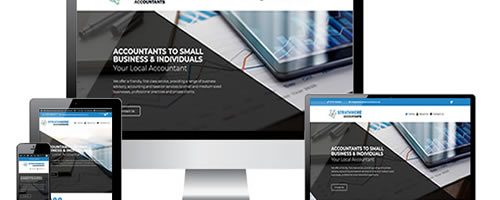
For those working to a tight budget or just after something simple, our WebStarter service includes everthing you need for a professional image on the Internet. It includes a 3 page Website, together with comprehensive Email facilities.

If you are thinking of buying your first Website or building your own and have been browsing the Internet looking at all the options, then you may already be a bit confused by now. The following pages, therefore, offer some advice that, hopefully, will take some of the mystery out of buying or how to build an Accountant Website. There are, basically, eight main areas you need to consider when purchasing or building your own Website;
If you are looking to have your own Website on the Internet, then you will need to purchase a Domain Name / Web Address. Since there are literally thousands of companies on the Internet where you can register a Domain Name and all offering more or less the same service, we would advise choosing a supplier based in your own country. Although, in theory, it shouldn’t make any difference, issues such as time zones and cultural differences may become a factor later on in your relationship.
When selecting your Domain Name, it is much better to try and keep your Domain Name as short as possible, to make it easier for people to remember and type into their Browser. Also, try and avoid the use of hyphens in the name. When most people are trying to find your Website by entering your business name (followed, usually, by dot co.uk or dot com), they don’t tend to remember hyphens, in which case, they may get a little frustrated with “Website does not exist” messages.
If you are a UK Accountant and primarily sell to a UK market, we would recommend purchasing the dot co.uk extension for your Domain. This gives you a stronger UK identity on the Internet. However, many people tend to buy both versions to stop any unscrupulous businesses buying and highjacking their web address name.
Registering and setting up a Domain Name can take as little as ten minutes and be up-and-running the same day. If you are considering purchasing a Website at the same time, then most Accountant Web Designers include the cost of registering a Domain Name in their costs. In which case, save yourself some money by letting them do the work for you. Why pay twice?
When registering a Domain Name, make sure you become the legal owner. Some Accountant Web Design companies retain legal ownership of Domain Names. It is unnecessary and may cause issues at a later date. In the event of changing suppliers at a later stage, you may wish to confirm that you will have access to your Domain Name settings. This will make it much easier to transfer your Domain Name to another supplier.
Our clients have access to their own Domain Name Admin Panel. If you already own a Domain Name or are in the process of choosing a Web Designer to build your Website, then let them deal with the IPS TAG Transfer. It should be part of their standard service. All Hosting Companies purchase Domain Names at approximately the same cost, therefore, there is no reason to pay inflated prices. For example, we charge £10 for a Dot .co.uk Domain Name for one year.
For your Website to appear on the Internet and for you to send and receive Emails using your new Domain Name, you will need to purchase Website Hosting. However, Web Hosting is not usually something you need to consider when using a Web Designer or using a Website Builder supplier, such as, Wix.com. If using a Web Designer, the first years hosting ought to be included in their initial costs.
It is probably prudent not to purchase any Website Hosting Plan until you have decided who or what will be used to build your new Website. When it comes to choosing a Hosting Company, our advice is similar to what we recommended when registering your Domain Name. Since there are literally thousands of companies on the Internet offering Web Hosting and offering more or less (more below) the same service, we would advise choosing a supplier based in your own country. Although, in theory, it shouldn’t make any difference, issues such as time zones and cultural differences may become a factor later on in your relationship.
Ideally, it is better to have your Domain Name and Website Hosting with the same supplier. If there are any issues, you only have one telephone number to contact! For business Websites, you should avoid using free Web space offered by many Internet Service Providers (ISP) and other Internet related suppliers. Apart from looking unprofessional (caused by excessive use of advertisements etc), free Web space is not favoured by many Search engines. It can be quite difficult to get your site noticed, so why create unnecessary hurdles?
When selecting a Website Hosting Plan, it is very important to confirm what is, actually, included. As a minimum:
To use as a good comparison, you may wish to look at what is included in our comprehensive, high performance Website Hosting Plan. At £6.50 per month, it is one of the best value Hosting Pans to be found anywhere in the UK.
Building a Website is no different from decorating your house. If you are prepared to spend as much time sanding down the paintwork, filling in the holes, priming the paintwork and washing everything down, as you do decorating, then applying the same principles to building your Web site will be a breeze. It should be no surprise, successful Accountant Websites are directly related to the amount of effort put into preparation. The first thing you need to decide is; what are the objectives for the Website. Is it for:
Ultimately, your objectives should dictate the type of Website you build. If you have no Website objectives, how are you going to evaluate if your Website has been a success? Basing the success of your Website, purely on referrals, is never a good idea and is why many Accountants view their Website as a failure or something that they are not particularly interested in. By not widening their Website’s objectives, many Accountants are “missing a trick” and failing to maximise the potential of owning a well thought out Website. To give more of a feel for Website objectives, you may be interested in our The Benefits of a Website article.
Not so long ago, having a Website was a big deal and the fact that it aesthetically didn’t look particularly impressive, wasn’t a major issue. However, things have moved on a lot since those days and first impressions are now very important. You can have the best content in the world but if the look of your Website “turns” visitors off or makes it hard for them to find what they are looking for, then you have little chance of turning visitors into clients.
If budget is not an issue, then it is always best to use a professional, Accountant Website Designer (no surprise there!) to develop your new Website. Not only should they be able to develop an aesthetically pleasing looking Website, they should also be able to:
If you do decide to build your own Website, then their are two obvious routes to take.
The first is to use a Website Builder supplier, such as Wix.com. This type of service is attractive for the really small business with, perhaps, budget issues or not wanting to spend too much on their Website. The entry level, monthly subscription can look appealing but you have to beware of any hidden costs. For example, you will have to pay extra for Email. Remember, also, you are only renting the website i.e. if you decide to move to another supplier, then you will lose the website.
A much better alternative, is to use the WordPress Website Builder, used by over 60 million Websites, worldwide. Our own Website is based on the WordPress Platform, as is most of our client sites. All Hosting suppliers support this terrific platform, so if you decide to move to another supplier, then you can easily take your website with you.
Since WordPress is a much more sophisticated Website Builder than the likes of Wix.com, the learning curve is a little steeper but still within the ability of the absolute beginner.
For a WordPress Website, all you need is Website Hosting. Our own Website Hosting Plan, offers everything you will need and is, arguably, one of the best value Hosting Plans to be found anywhere in the UK.
In fact, there is a third option! Most small Accountants, requiring something professional but simple, find our WebStarter service very good value for money. It has been specifically designed for the very small Accountant and should be well within the budget of everyone. It includes a three page website, together with everything else you will need, such as, comprehensive Email facilities.
Making it easy for visitors to navigate your Website should always be one of your top priorities when designing your Website. The following are some points you may wish to consider;
When developing your Website, it is always prudent to incorporate web design techniques, to help make your Website friendly to Search Engines. In the industry, this is called Search Engine Optimisation (SEO). Not doing so, does not really make much sense and why would anyone want to ignore the modern phenomenon that is, free Internet advertising. Without going into detail, since this subject is fully explained in our two other articles, Why optimise your Website and How to optimise your Website, please find a summary of the key points listed, below.
Ultimately, the success of your Website will depend on the quality of your written content and it’s ability to turn visitors into clients. It is not easy and can take many attempts to try and get it right. Below, is a summary of what needs to be considered. A fuller description is detailed in our other article, How to write content for Websites.
You can have the best Accountant Website in the world but if no one knows it exists, then it is not going to deliver the success you hoped for. How you promote your Website really depends on what your objectives are for the Website. Is it purely for lead generation or is it also to be used for helping improve customer support levels. Either way, your Website is no different from any other service or product you offer: you still need to tell people about it. The following are some steps you can take to promote your Website, especially, new Websites.
Although it makes sense to register your Domain Name as soon as possible to stop someone else buying it, there is no need to purchase a Website Hosting Plan until you have decided who and what will be used to design your new Website.
If budget allows, it is always best to use a reputable Accountant Website Designer. Apart from developing a good looking Website, they should be able to advise on all the other issues that will dictate the success of your Website.
If budget is an issue, we would recommend a service, such as our WebStarter service, or the WordPress Website Builder, or Website Builders, such as Wix.com, in that order of preference.
If you want to give your new Website every chance of succeeding, you will have to put in the necessary thought and planning before coding starts. This is where a good Accountant Web Designer comes in!
Think about the type of people visiting your Website. The issues they will have and the answers they will expect to find from your site. View your Website through the eyes of your visitors and you won’t go far wrong. Have clear objectives for your Website, over and above just being a tool for lead generation.
A Website has the potential to be an invaluable, proactive business tool in the day-to-day running of your business. Widening it’s objectives into every area of your business, could lead to significant benefits and cost savings. Is there a better multi-discipline business tool?

I am the Founder and a Director of The Holt Partnership, working for many years in the Accountancy Industry in both Practice and as a Financial Controller, before moving into negotiation based sales, selling mid-range Business Systems, before progressing and selling multi-million pound Bank and Securities Reconciliation systems to the Commercial & Investment Banking sectors.
Consider a Website as an, everyday, proactive business tool, to get it performing to

Do you think you are getting the most out of your Website? Although this

Implementing the simplest of steps to help your Website succeed Although this article is
Research has shown Are you worried about how long people are staying on your
Do you need a Mobile friendly Website? Although this article is primarily aimed at

Objectives are important because they convert visions into clear-cut measurable targets Although this article

Take some simple steps If you are a Website Owner, there are some simple

Do you need to optimise your Website for Search Engines? Although this article is


Holt House
The Holt
Welwyn Garden City
Hertfordshire
AL7 2HU