Intent driven SEO
The days of ranking your accountancy firm on Google by simply repeating “accountant in [city]” twenty times on a webpage are officially over. Over the last five years, search engine optimisation (SEO) has undergone its most radical transformation yet.
Google has evolved from a simple keyword matcher into an AI-powered “answer engine.” Today, search algorithms don’t just read your words; they attempt to understand user intent. When business owners search for financial advice, Google looks for genuine authority, real-world experience, and immediate clarity.
For accountancy firms, this shift requires a complete rethink of website design and content strategy. Here is how to build and optimise a modern accounting website that aligns with how people search today.
1. Optimise for Search Intent, Not Just Keywords
Search engines now categorise queries by what the user actually wants to accomplish (e.g., informational, navigational, or transactional intent). Your website structure needs to mirror these intents.
- The Informational Phase: Prospective clients rarely start by looking for a checkout page. They search things like “How do I structure a dividend payment?” or “What can I claim as a business expense?”
- The Fix: Build a dedicated, clean, and highly organised Insights or Knowledge Hub. Design it for scannability with clear headings, summary boxes, and bullet points. Answer these specific questions directly.
- The Transactional Phase: When they are ready to hire, they search for “specialist tech startup accountants” or “corporate tax services.”
- The Fix: Create dedicated, high-intent landing pages for each industry or specific service you specialise in. Don’t lump “Tax, Payroll, and Audit” onto a single, generic services page.
2. Design for E-E-A-T (Experience, Expertise, Authoritativeness, Trustworthiness)
Google’s quality guidelines place supreme emphasis on E-E-A-T, particularly for financial and legal topics (which Google classifies as “Your Money or Your Life” content). Your web design must visually and textually prove your credibility instantly.
- Author Profiles: Never publish an article under a generic “Admin” or “Firm News” tag. Every blog post or technical guide should feature a clear author bio, complete with the accountant’s qualifications (ACA, ACCA, CTA), a professional headshot, and a link to their LinkedIn profile.
- Social Proof Integration: Embed live Google Reviews, client video testimonials, and case studies directly onto service pages. Highlighting regulatory compliance, professional memberships, and award badges in the footer or header builds immediate trust with both users and Google’s crawlers.
3. Structure Content for AI Overviews and “Zero-Click” Searches
Google and alternative AI platforms now synthesise web content to answer user questions directly on the search results page. To ensure your firm is cited as the primary source in these AI-generated summaries, your site’s architecture must be highly structured.
- Q&A Formatting: Incorporate “Frequently Asked Questions” sections at the bottom of service pages. Use clear, conversational questions as headings (H2 or H3), and answer them immediately in the first 2–3 sentences of the following paragraph.
- Clean Layouts over Fluff: Use tables for tax thresholds, bulleted fragments for step-by-step compliance processes, and bold text for key figures. Clean, structured data is much easier for AI models to parse, extract, and attribute back to your website.
4. Humanise the Firm with Multimodal Content
As AI-generated text floods the internet, search engines and users are craving authentic human perspectives. Websites relying entirely on generic stock imagery and dry technical jargon are falling behind.
- Video and Audio Elements: Consider embedding short, 60-second video overviews at the top of key service pages (e.g., the partner explaining how their onboarding process works).
- Dynamic Visuals: Instead of standard stock photos of handshakes, use custom infographics to break down complex tax timelines or financial structures. This keeps users on your page longer, sending positive signals to search engines, while also optimising your site for visual searches like Google Lens.
5. Prioritise Seamless Technical Foundations
An intent-driven SEO strategy will fail if the user experience is frustrating. Modern search algorithms heavily penalise sites that are slow, clunky, or confusing.
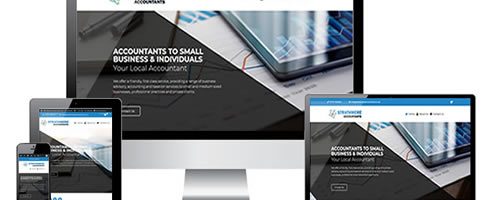
- Page Speed and Mobile Responsiveness: Accountants deal with busy business owners who routinely check websites on their phones between meetings. Ensure the site loads rapidly and functions flawlessly on mobile devices.
- Intuitive Internal Linking: Make it incredibly easy for a user to transition from reading an informational blog post about “R&D Tax Credits” to viewing your specific “Corporate Tax Service” page, and ultimately to a “Book a Discovery Call” contact form.
The Bottom Line for Accountants
Modern SEO isn’t about gaming an algorithm; it’s about providing the most accessible, authoritative, and direct solution to a business owner’s problem. By designing an accounting website that organises information around user intent, highlights verified human expertise, and serves data clearly, you create a digital presence that both Google and potential clients will trust.
Important note: the above should be considered in tandem with traditional SEO techniques, viewable in our, How accountants can optimise their Website for Search Engines article.